Some games remain in memory as plot.
StarCraft remains items.
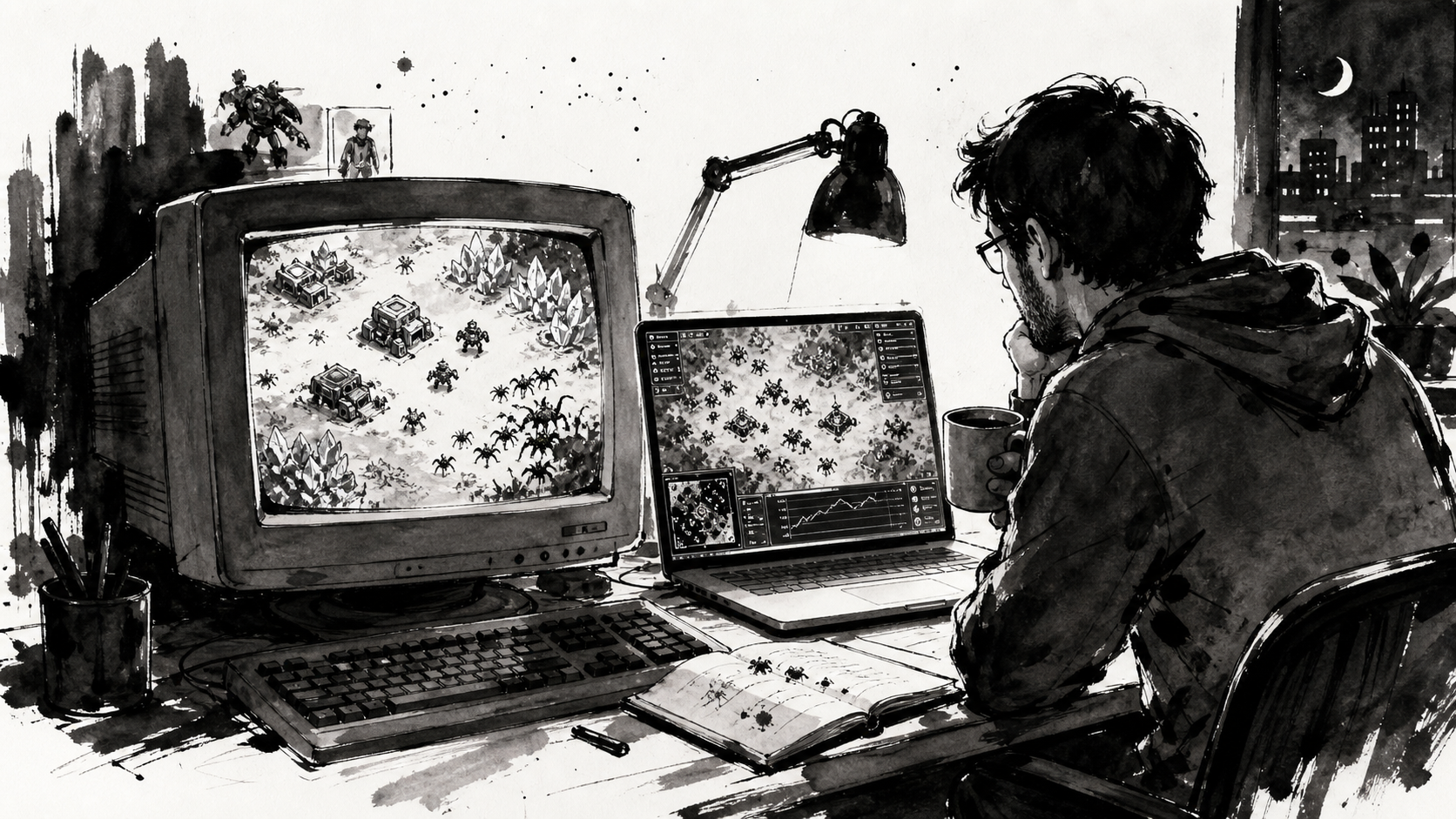
A yellowed keyboard whose space bar shines like polished stone. A mouse with a ball, if you're old enough to remember the little rubber archeology inside. A rug with someone else's logo. Headphones where one ear works properly, the other works by agreement. Half liter bottle of iced tea. A bag of crackers. A screen that weighs like furniture at the back, but at the front shows a universe where minerals decide everything, not morality.
StarCraft was never merely a game about space. It was about the table. About the left hand, which searches for hot keys before the head has formulated a thought. About the right one, which moves the mouse with such nerves, as if not the army, but the entire reputation in the area depended on it. About the phrase: “one more, and that’s it.”
That phrase has always been a lie.
Twenty years of one habit
Formally, this is already more than twenty years of one cultural habit, if you count the entire series, and almost sixteen years of the second part. But the calendar doesn't work well here. StarCraft does not measure itself in years, but in layers.
The first layer is the computer club. It smelled of plastic, dust, cheap deodorant, wires and someone else's time. Someone behind you was playing Counter-Strike. The counter counted the minutes. On a nearby computer, someone screamed as if the game had not killed him, but a notary had betrayed him. You were a little quieter in StarCraft. Not because it was better. StarCraft demanded a quieter kind of panic.
The second layer is the home computer. Evening. You keep the sound low. The screen shines as if a small military headquarters had opened in the room. You do not yet understand what a macro is, but you already feel: if you forgot the workers, you don’t have to explain everything else.
The third layer is YouTube and streams. You can no longer launch the game. You can watch. You already have work, bills, unanswered messages, but for fourteen minutes you understand again why the phrase “he went into fur” sounds like the beginning of a weather warning.
Attributes of Faith
Every old game has its relics. StarCraft doesn't mean swords, cloaks, or beautiful art books.
These are hotkeys. These are control groups. This is APM, the dreadful number teenagers treated like bicep size. Whoever has more seems to be more serious. Then it turned out that you can press fast and still make foolish decisions. A useful lesson for the rest of your life.
This is the mineral line - an even row of workers whom you somehow trust more than many people. A supply block is a small administrative disaster. Nobody died, but everything has already gone wrong. You wanted to build an army, but the game said: infrastructure first, young man.
Supply block is when the bureaucracy arrives before the enemy.
This is a tank. Not a unit, a character. It loves distance, position, preparation and people who say, “I've thought of everything.” That's why it suits an adult man so well. He has a dream of control that is almost never fully realized.
The match is like a closed door
In the video, Basset watches GuMiho vs. YoungYakov. Terran vs Zerg. Mechanization versus living map. New PTR patch, where starting workers become 8 instead of 12, bases get more resources, and the game tries to stretch out the early and mid stages again.
It’s better to know a little about the match itself. Not because there is nothing to disassemble there. Vice versa. Because StarCraft still knows how to work as a mystery. If you sort out in advance who went where, who lost what, where the twist was and how the story ended, a protocol will remain. But a good game is not a protocol. This is a room that you have to enter yourself.
The premise is enough: GuMiho is a man of metal, a Terran with a love of non-standard and mechanization. YoungYakov - Zerg, who is interesting to watch not because of the last name in the title, but because of the way he treats the map: alert, tense, respectful of corners.
Then the old conversation begins. Is it possible to build enough order so that chaos does not enter? Can you be alive enough to make order go wrong?
A good game is not a protocol. This is a room that you have to enter yourself.
Mechanization as a masculine interior
The Terran mech has the aesthetic of a garage, a warehouse, a workshop, a military department, and a man who keeps a box of wires “because it will come in handy.” Everything is heavy, buzzing, angular. Everything requires a position. He doesn't tolerate anything well when people come to him from somewhere other than his own.
Zerg has different attributes. Not a table: soil. Not a garage, but a basement under the entire city. Creep is like a carpet that someone laid out without permission. Overlord is like an unpleasant thought hanging over your head. Lurker is like a problem that you don't see until it's too late. Viper is like a hand pulling out what thought itself to be immovable.
That's why the GuMiho vs YoungYakov match is good as an occasion, even if you don't retell it to the end. In it, two old male fantasies meet again. First: I will build a system and it will endure. Second: I will find a gap, and the system will remember that it is alive.
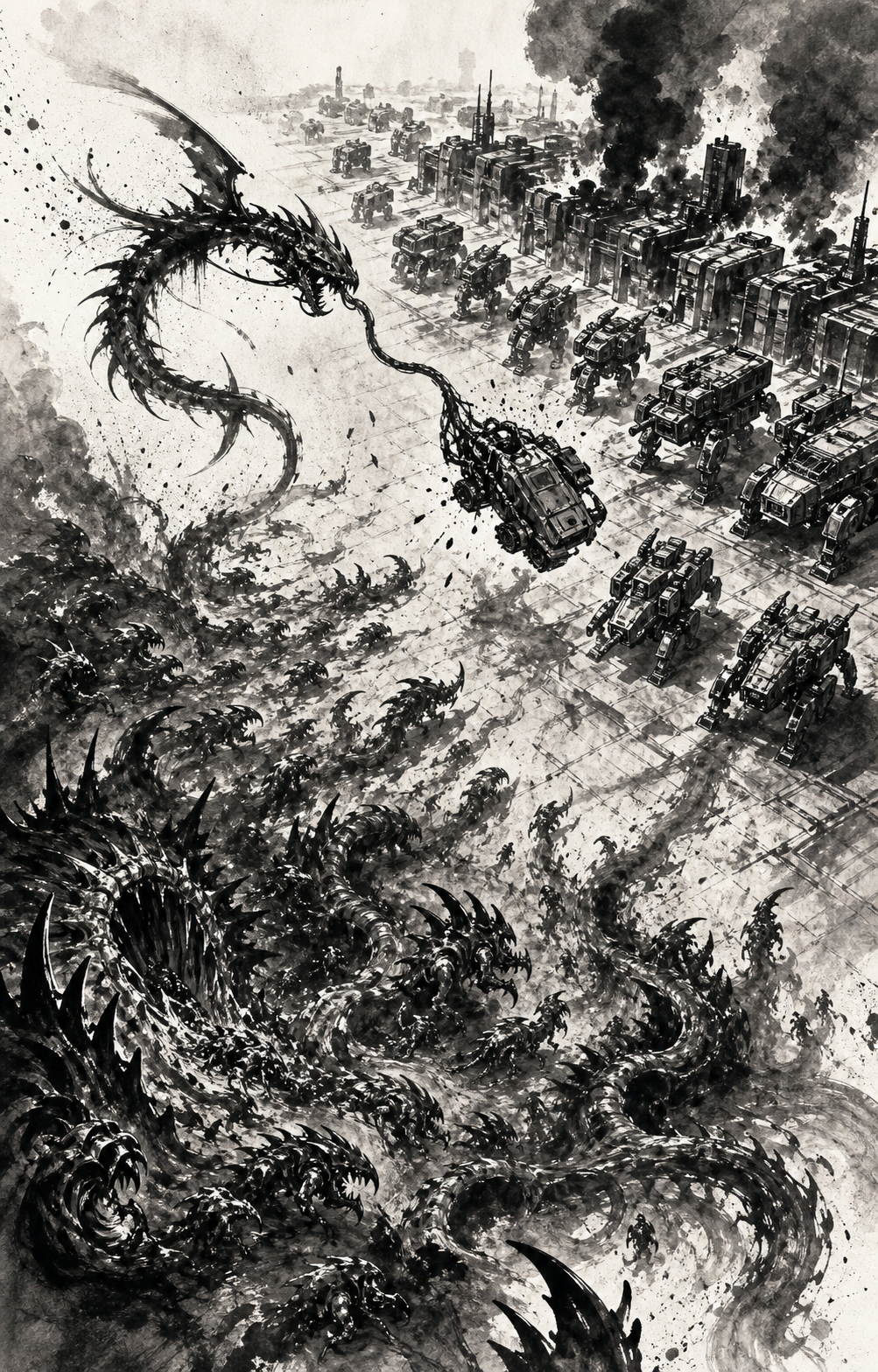
Fur is a dream of control that almost never fully comes true.
Must watch match
It’s better to say about GuMiho vs YoungYakov this way: this is not a match that you need to know from retelling. This is a match to switch on.
There will be a caster’s voice. A new patch. Mechanisation that wants to become destiny. There will be a Zerg there who doesn't have to agree. There will be a moment when the map ceases to be a picture and again becomes a place where someone understood something before another.
And then let it remain a mystery.
StarCraft has never been about having everything explained to you. It was about what you failed to scout.