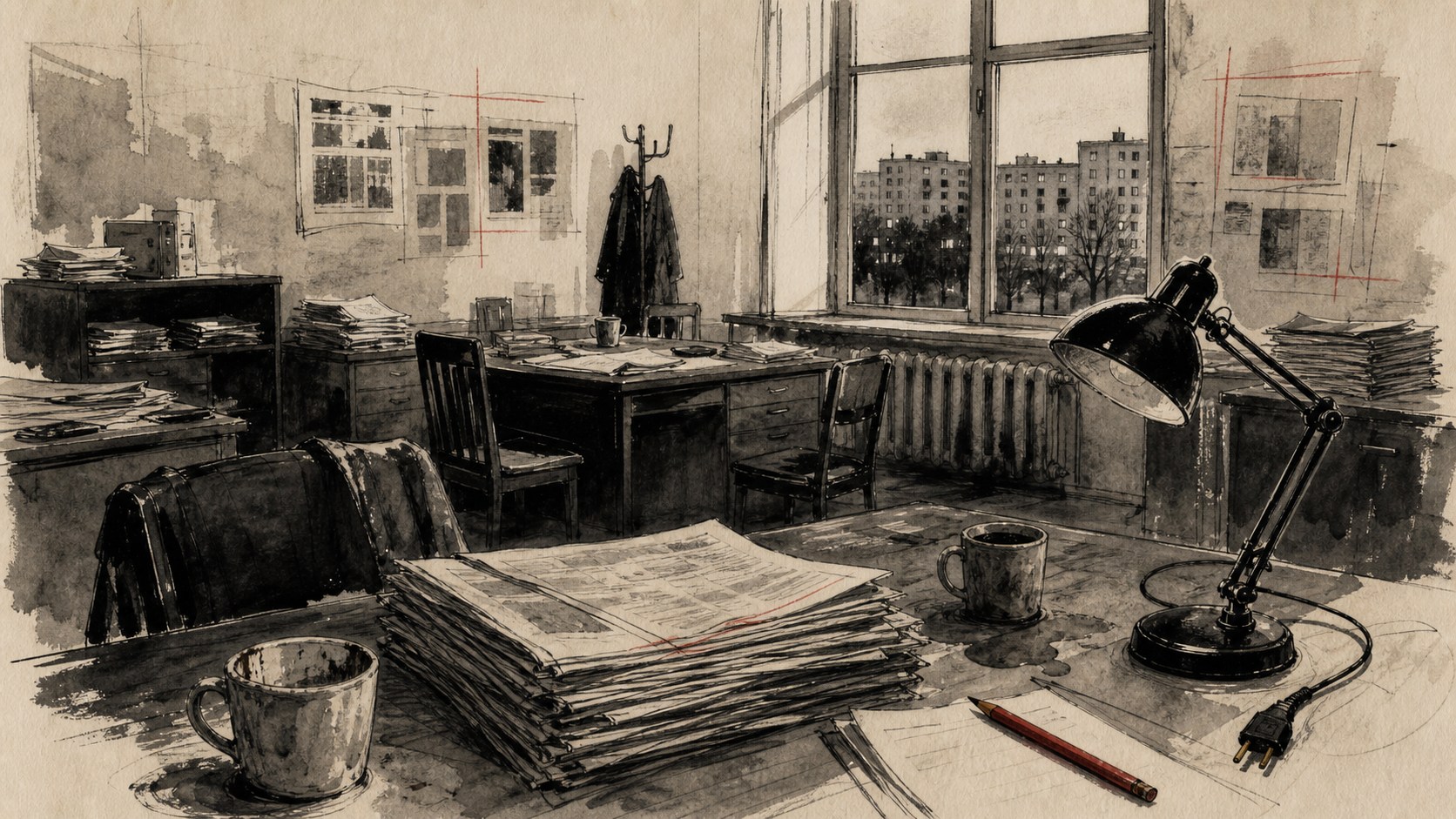
I, too, probably need to say something memorial about the Narvskaya Gazeta. Moreover, today, it seems, colleagues have finally nailed down the lid of the coffin.
I write “it seems” because formally, of course, everything is not so. Formally, publication is suspended. Financial trouble has arrived. ERR reports that the latest issue will not appear this week, the newsroom has no staff left, and the publisher is looking for more investment.
This is speaking in the normal language of people who still believe in press releases.
Apparently, I no longer believe much of that.
I left on May 17th. If I remember it right, already under the article. I understood pretty well how it would end. But let us not talk about that. Let us talk about the funny part.
That's what's fun here.
For the first time, as far as I remember, I got to work at Narvskaya Gazeta in 2007. I was then leaving Ireland, where I was working for a Russian newspaper in Ireland. Its name, naturally, was Our Newspaper. Dublin, 1.3 million people, almost the entire population of Estonia, Guinness, big city, bustle, civilization.
And now I’m going to Narva. I have already reached an agreement with the then editor Seryoga Stepanov. I’m driving and thinking: that’s it, I’m going to a country where nothing happens. Where it's quiet. Where it's calm. Where you can write about culture, pipes, meetings and people who know how to distinguish protocol from reality.
The next day was Bronze Night.
That is, I arrived in a Narva slightly different from the one I had set out for. While I was flying, driving from Riga, getting further and building a quiet Estonian life in my head, the country managed to become different. Narva changed with it.
For me, and for Sasha Khobotov, for example, “Narvskaya” was an alma mater. Well, in Estonia. Before that, I already worked at the Ryvan newspaper, but that was another thing entirely. And here everything became adult at once: the city, politics, people, layout, calls, deadlines, grievances, edits, smoking room.
And if we speak as confusingly as I say now, then my mother, Olga Olegovna, worked there as an editor. Over the years, many of our mutual acquaintances, friends and colleagues have passed through Narvskaya.
Yes, the hurt is enormous.
But I don’t want to talk about the reasons and culprits now. They will find them. Narva is good at that. In Narva, they are generally quite good at finding the guilty, especially when it comes too late to save something.
I want to say something else.
I am grateful to all the colleagues with whom we have worked over the years. And to those who were close now, because we all saw it end together. That is a special pleasure: watching the end of a newspaper from the inside, pretending that you are still working in the editorial office, and not standing in a room where the furniture has already left in everyone's head.
I am grateful to the subscribers. All deliveries. To the guys at Printall who kept us printing until the last moment. Even the guys from Omniva who delivered us, although there was always a lot of drama in the relationship between the newspaper and the post office.
A newspaper is not made of texts alone. That is the naive version. The newspaper consists of a route. Of the people who write it, print it, transport it, lay it out, wait, scold, read it in the kitchen, send the clipping to relatives and say: “Did you see what they wrote there again?”
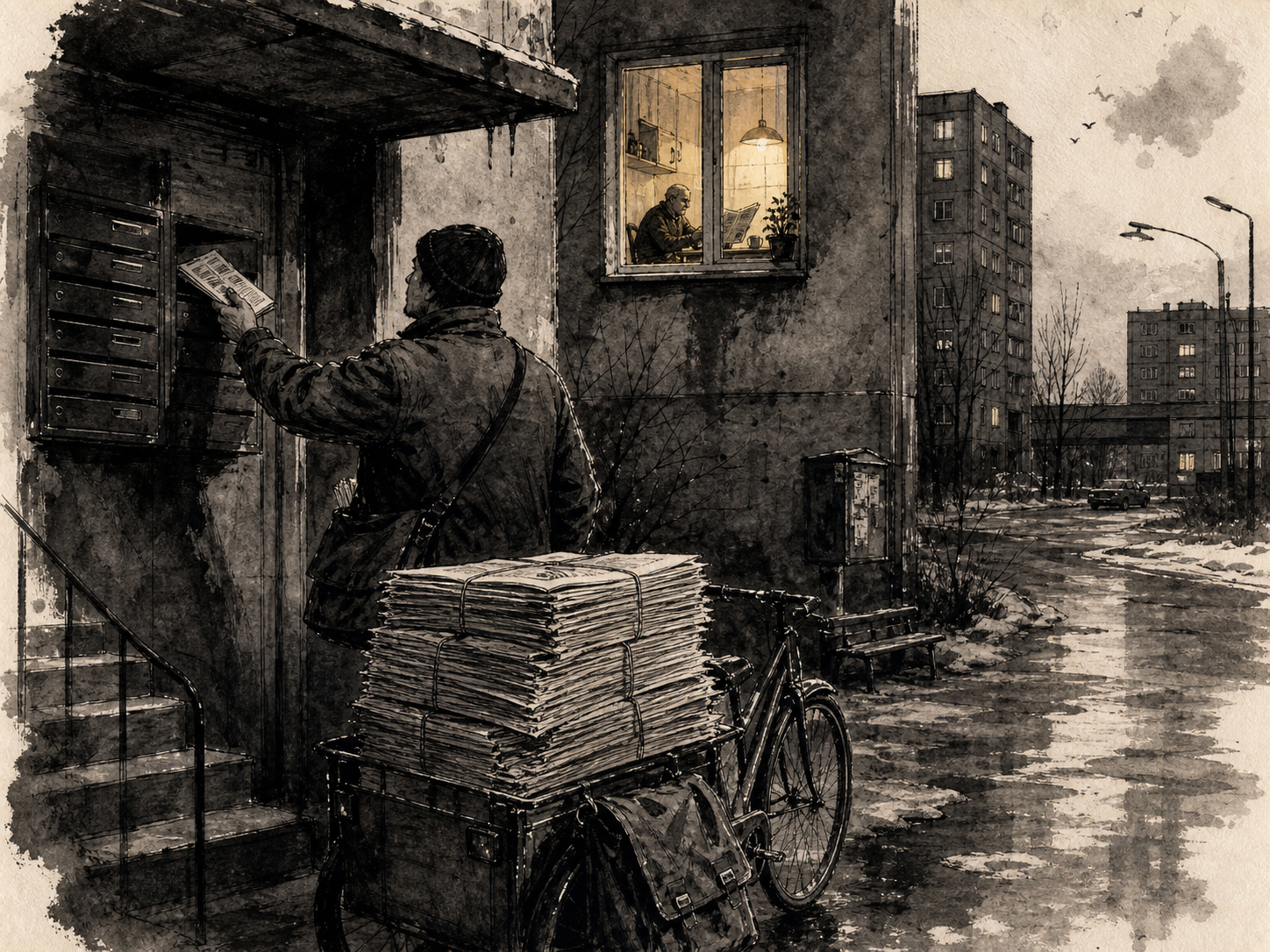
A newspaper ends on paper before it ends in people.
There will be no new issue this week. Perhaps someone else will find the money. Perhaps someone will restart something. Perhaps in a month they will explain to us that all this was not a closure, but a difficult organizational stage.
There are no former journalists. And it seems there are no former newspapers.
They stop coming out on Wednesdays and start coming out somewhere inside: in memory, in habit, in resentment, in gratitude, in the ridiculous desire to check in the morning to see if a new number has appeared.
I think so.
We are eternal.
Or at least hard to delete.