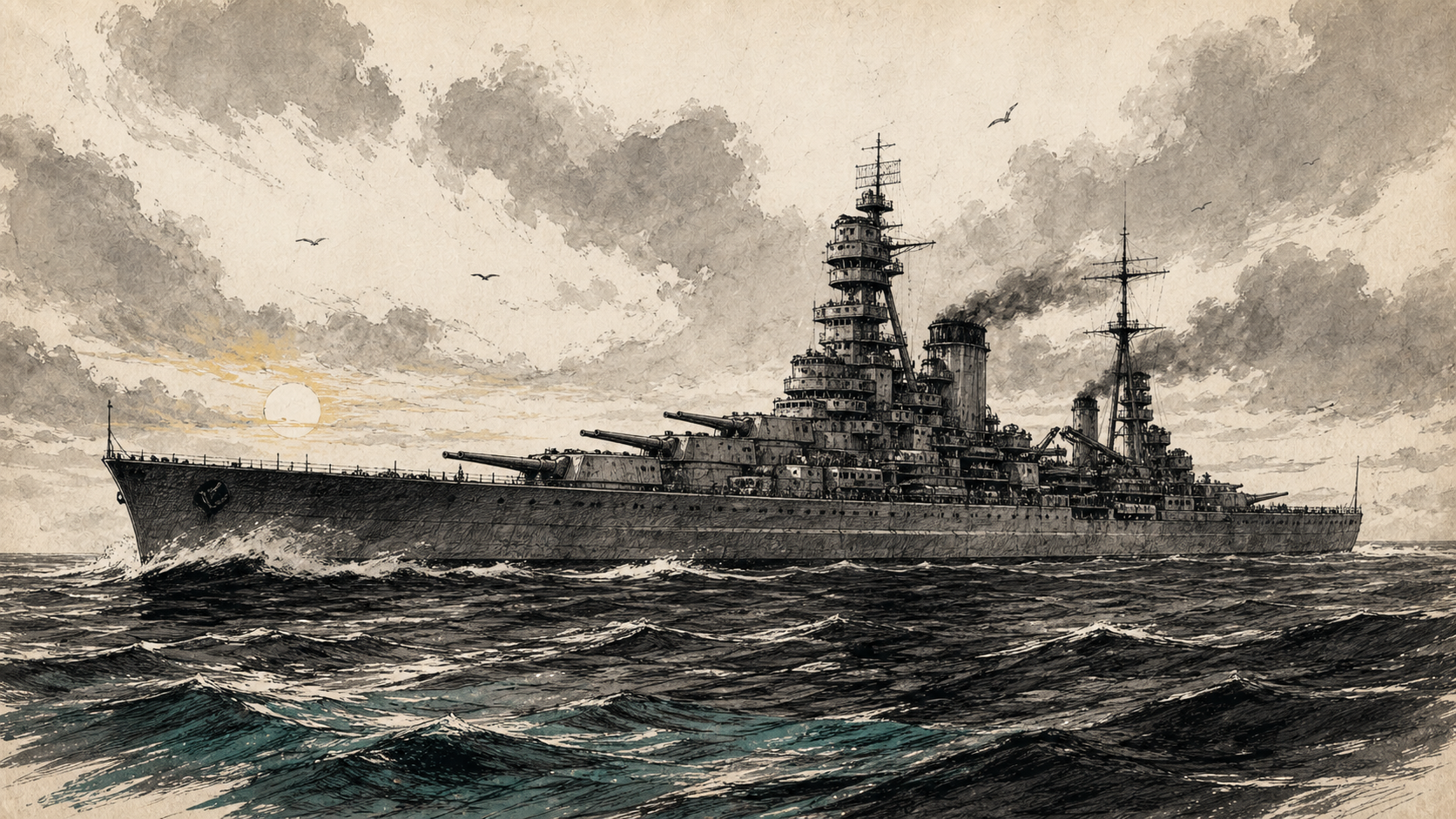

On 24 May 1941, in the Denmark Strait, the British HMS Hood and HMS Prince of Wales intercepted the German Bismarck and Prinz Eugen. The German force was trying to break into the Atlantic, where it could threaten Allied convoys. For the British, this was no handsome naval episode. Plain fleet work: find them, stop them, keep them from breaking out.
In retellings, the story soon becomes Bismarck’s story. It has a convenient dramaturgy: a new battleship enters a breakthrough, a chase begins after it, and a damaged rudder leads to the finale. But on the first day he was not the main one. The main one was Hood, because it was his death that turned the operation from an interception into a matter of national prestige.
Hood was more than a ship. Britain looked at the sea through it and recognised itself.
Help without fog
HMS Hood was a British Admiral-class battlecruiser. The Royal Navy laid it down during the First World War; it entered service in 1920. By the start of World War II, Hood remained one of the most recognizable ships of the Royal Navy. The Navy called it Mighty Hood, sent it on long cruises and let it stand for the idea that Britain still knew how to look at sea.
Do not confuse the symbol with the technical file. According to documents, the Hood was a large, fast warship with heavy artillery. In the public imagination it was broader: a showcase of the fleet, a familiar picture of imperial confidence, an almost official portrait of the country in profile. Symbols become dangerous when they start to look eternal. Armour helps the illusion.
Place, date, participants, mechanism. A beautiful legend will wait his turn.
What happened
The battle began in the morning. Hood and Prince of Wales were closing in on Bismarck and Prinz Eugen at high speed. Minutes after opening fire, Hood received a fatal hit, exploded and sank. More than 1,400 crew were aboard. Three survived.
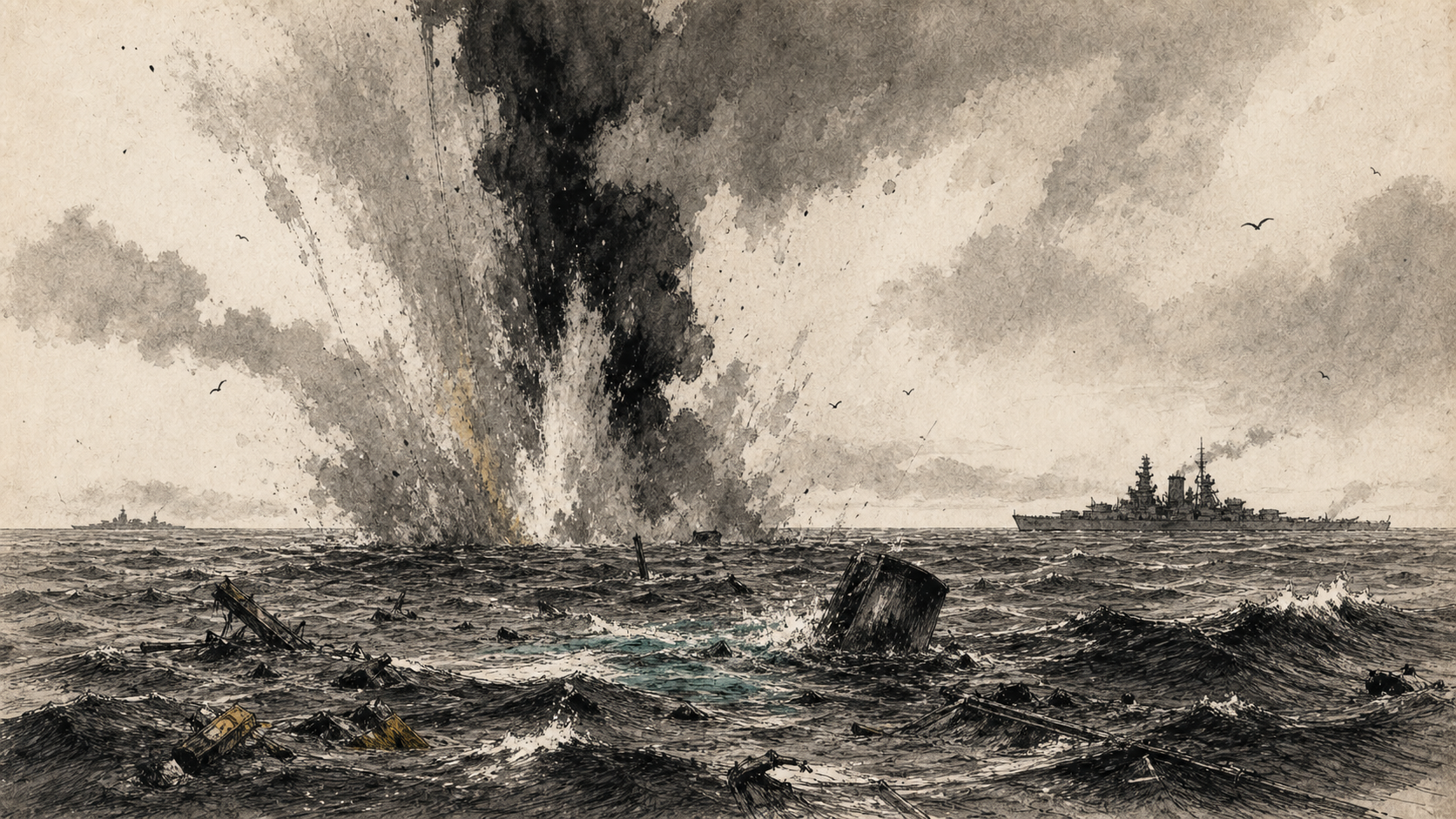
They have argued and continue to argue about the exact mechanics of the explosion: in such stories you always want to find one ideal cause, preferably with a drawing and an arrow. But this does not change the general meaning. The ship, which for two decades looked like a ready answer, disappeared faster than society could find a normal language for this event.
The disaster frightens because it breaks more than metal. It breaks the language with which the country explains its own strength.
Why did Bismarck take the title?
After the death of Hood, the British fleet began the hunt for Bismarck. The damaged Prince of Wales left the battle, the German battleship was also damaged and lost some of its freedom of manoeuvre. Three days later the Royal Navy caught and sank Bismarck. This part of the story sticks: grudge, chase and final point are all present.
Hood works differently. Its plot does not develop; it stops. Memory jumps to Bismarck: action remains, figures move on the map, the story behaves like a movie. Hood remains what made this movie painful.
The chase is more photogenic than the loss. Memory always chooses the picture.
Symbol versus era
Hood was not a cardboard set. This was a real warship, but created by the logic of the previous war. Interwar modernizations could extend its service, but could not reverse the age of the design and the debate between speed, armament and protection. You can touch up an old symbol. You cannot make it new-born.
Bismarck looked like a ship of new strength, but it also did not last long on the military campaign. This is a dry historical irony: one symbol died from a blow, another from a system of pursuit, communications, aviation and navy, which turned out to be broader than any single battleship.
Hood was a big beautiful argument. In the Denmark Strait it became clear that the war had a different style of argument.
Narva morality, of course
What interests the NARVAL here is not the nautical pathos. Pathos quickly deteriorates, especially when there is cold water nearby and a list of the dead. Another thing is more interesting: how a large form meets its own technical truth.
Any large shape can look like a load-bearing structure. Ship. Newspaper. City position. Facade. The usual order. Then an event comes and checks what exactly it all means. Sometimes the structure was not holding; the habit of looking at it was.
Hood's story does not negate Bismarck's story. It simply puts the emphasis earlier: before the hunt, before the final battle, before the convenient plot of retribution. First there was a ship in which too many people found confidence. Then came the place where she disappeared.